

Autumn Budget 2026: What the Changes Mean for You
30 October 2026 Reading time: 10 minutes
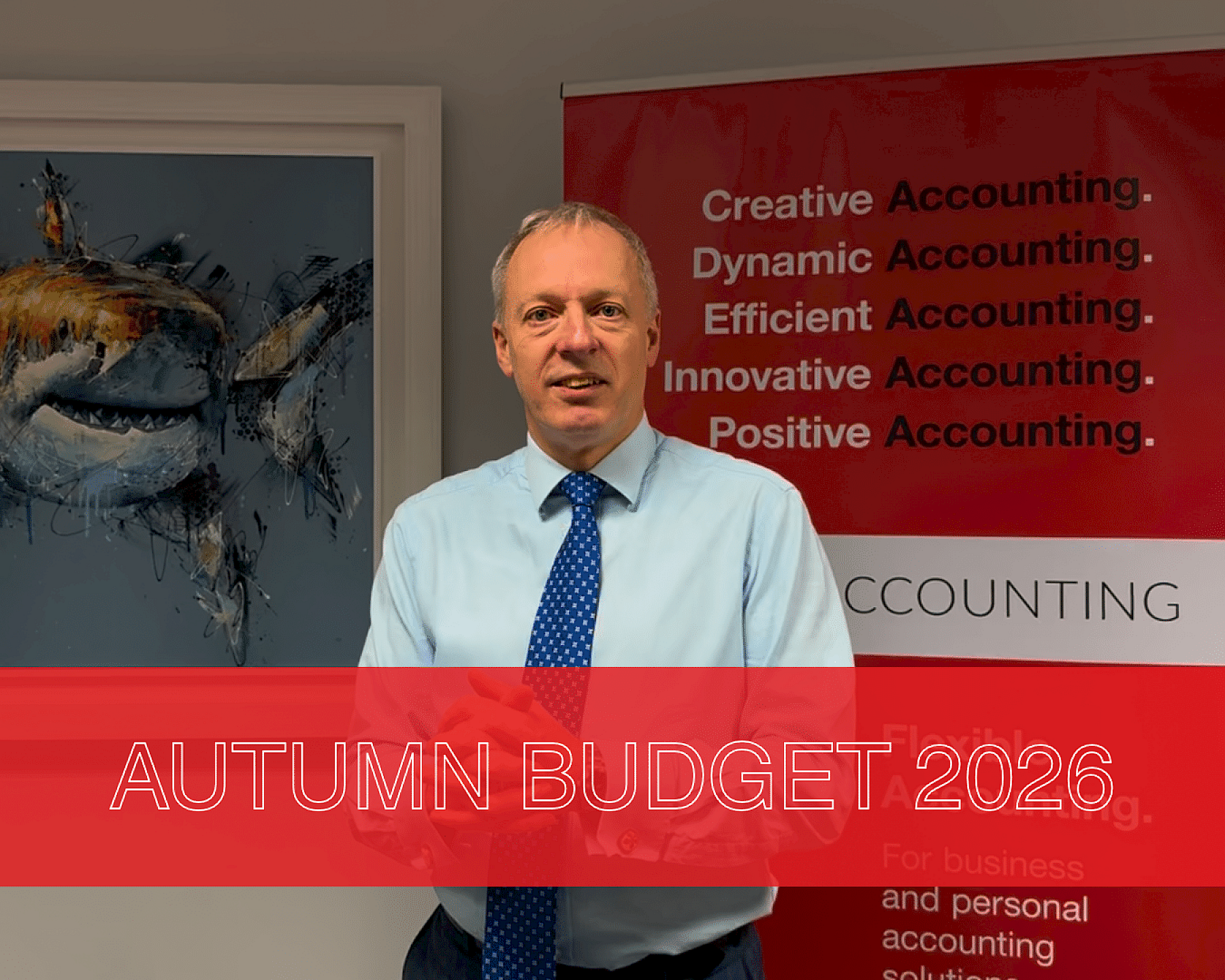
This year's budget brought a mixture of measures affecting households, business owners, landlords, savers and pensioners. While there were no sweeping changes to Income Tax on earnings, several announcements will have an impact on personal finances and business planning over the coming years.
In our Autumn Budget Review, Adrian Mole, our Principal and Chartered Accountant, talked through the key announcements, what they could mean in practice and where some forward planning may be worthwhile.
As Adrian pointed out, the Budget was relatively light on major announcements, although there were still a number of changes worth keeping an eye on. One announcement that was particularly puzzling involved a rather unexpected food-related tax cut:
“But we are in a bit of a pickle, and I guess that's why they reduced 4p tax on a jar of gherkins yesterday. Just no idea where that came from!”
Away from the gherkins, here are some of the main points to take away.
Households: Help with energy bills
With energy costs continuing to put pressure on household budgets, the Government announced further support.
Households in council tax bands A to D in England are due to receive a £100 Household Energy Payment from January 2027. The Government has also extended the temporary zero VAT rate on qualifying domestic electricity supplies until July 2027.
There are also plans to abolish domestic gas standing charges from 2027, alongside reforms to electricity standing charges. Further details are expected next year.
For motorists, the temporary 5p-per-litre fuel duty cut has been extended until 1 July 2027.
As Adrian noted, these measures are intended to offer some help with the cost of living, particularly for households feeling the pressure of higher energy and everyday costs.
Minimum wage: What employers need to know
One announcement that will affect many businesses is the increase to the National Living Wage and National Minimum Wage from 1 April 2027.
The new hourly rates will be:
-
21 and over: £13.21
-
18 to 20: £11.27
-
16 to 17: £8.31
These rates represent an increase of 3.9%.
Although the increase directly affects employees paid at or around the minimum wage, employers may also feel pressure to review other pay rates to maintain differences between roles and levels of experience.
As Adrian explained during the review:
“It's very hard to sit on other people's pay rates when minimum wage is going up, because of course your tiers of employees get a bit out of kilter.”
It is therefore worth factoring the increase into payroll budgets and pricing decisions ahead of April.
Employers should also be mindful of HMRC's focus on National Minimum Wage compliance. It is not simply a question of the hourly rate shown on a payslip. Issues such as unpaid working time, travel between appointments and mileage arrangements can affect whether an employee is receiving the correct minimum wage.
Adrian highlighted that this can be particularly relevant to businesses with staff working across different locations, including those in the care sector. Even where an employee's basic hourly rate is above minimum wage, other elements of their working arrangements can bring their effective pay below the required level.
Business rates and capital investment
The Budget included further support for businesses in the retail, hospitality and leisure sectors, including changes to business rates for qualifying properties in England.
For businesses considering investment, there are also changes to capital allowances.
The Annual Investment Allowance continues to provide 100% tax relief on qualifying expenditure, subject to its rules and limits. However, for expenditure that does not qualify for this relief, the main rate of writing-down allowance is reducing from 18% to 12% from April 2027.
There is also a new 50% first-year allowance for qualifying main-rate expenditure incurred from 1 January 2027. This may provide a useful alternative for some businesses investing in equipment and other qualifying assets.
Adrian explained that the reduction in the writing-down allowance could mean it takes considerably longer for businesses to obtain tax relief on certain capital expenditure.
“Because that's reducing balance, it can take 15 years in some cases to get the majority of your costs recovered on a capital spend.”
His advice was to think carefully about the timing of significant purchases, particularly where a business is planning a large investment either side of April 2027. The type of asset and the relief available will make a difference, so it is worth reviewing the position before committing.
Landlords: Changes to property income tax
Landlords holding property personally will need to prepare for higher tax rates on rental income from 6 April 2027.
The new property income tax rates will be:
-
Basic rate: 24%
-
Higher rate: 44%
-
Additional rate: 49%
These rates apply to property income and are separate from the rates applying to employment income.
The changes are particularly relevant to landlords who are already managing higher mortgage costs, maintenance expenses and the costs of meeting energy efficiency requirements.
Adrian highlighted the pressure facing the sector, particularly for landlords with borrowing. Restrictions on mortgage interest relief can mean that some higher-rate taxpayers face a tax bill that takes a significant proportion of the rental profit actually available.
Also discussed was the growing number of accidental landlords – people who may have inherited a property or kept a former home as a rental rather than setting out to become landlords in the first place.
With tax changes, property standards and the Renters' Rights Act all adding to the challenges, anyone considering whether to retain or sell a rental property should review the wider financial and tax position before making a decision.
Savings and ISAs
The tax rates on savings income are also increasing from 6 April 2027, with the same new rates of 24%, 44% and 49%.
This means that interest earned outside tax-free savings arrangements could become more expensive for some savers. The amount of tax payable will depend on overall income and the allowances available.
There was some welcome news on Individual Savings Accounts (ISAs). The previously proposed reduction to the Cash ISA allowance has been reversed, meaning the annual ISA allowance remains at £20,000.
Adrian's message was straightforward: if you have savings outside an ISA and still have some of your annual allowance available, it may be worth considering whether moving some of those savings into an ISA could help reduce the tax payable on future interest.
Pensions: State Pension and tax changes
The existing State Pension Triple Lock will continue until April 2029. From April 2030, an adjusted Triple Lock is planned, with future increases intended to broadly track earnings.
Another important area is the new Pension Tax Allowance, which is due to take effect from April 2027.
The allowance is intended to prevent pensioners whose total income is no more than the value of the full new State Pension from having to deal with small Income Tax bills through Simple Assessment. It does not mean that all State Pension income will automatically become tax-free, and the allowance is reduced for those with income above the relevant threshold.
Adrian highlighted how the frozen Personal Allowance of £12,570 is becoming increasingly relevant for pensioners as the State Pension rises. Some people who previously had little or no tax to pay may now find themselves brought into the tax system.
His advice was to look at total income rather than just the State Pension, taking account of private pensions, savings and any other income.
The Budget also included changes to company car tax rates for 2030–31. Anyone entering into a company car arrangement over several years should consider the longer-term tax cost, rather than just the current rate.
Sole traders: Trading allowance and mileage rates
There are two changes worth noting for sole traders and self-employed individuals.
First, the Trading Allowance is increasing from £1,000 to £3,000 from 6 April 2027. This allows eligible individuals to receive up to £3,000 of trading or miscellaneous income without needing to declare or pay tax on it, where the allowance covers all of their relevant income before expenses. It can be used instead of claiming actual expenses, so it is important to consider which approach is more beneficial.
Second, the tax-free mileage rates for employees and self-employed people using their own cars or vans for work are changing.
The rate for the first 10,000 business miles is 55p per mile, applying from 6 April 2026. The rate for business mileage above 10,000 miles will increase from 25p to 35p per mile from 6 April 2027.
Adrian highlighted that these changes are worth factoring into business budgets, as they could affect both employers reimbursing staff and individuals claiming business mileage.
Capital Gains Tax: Business sales and Founders' Relief
There had been speculation ahead of the Budget that Capital Gains Tax rates could be increased to align more closely with Income Tax rates. This did not happen, but there are still important changes for business owners considering a sale.
The lifetime limit for Business Asset Disposal Relief (BADR) is reducing from £1 million to £500,000 for qualifying disposals made on or after 6 April 2027. This could affect the amount of gain eligible for the relief when selling a business.
A new Founders' Relief has also been announced, intended to support founders and early investors who have made a significant long-term contribution to the development of high-growth and innovative UK companies. It is expected to apply to qualifying disposals from 6 April 2027.
However, the detailed rules are still being developed and are subject to consultation. It is not a general relief for every business owner, and the eligibility criteria and practical application will need to be confirmed.
Adrian raised the uncertainty this creates for anyone already considering a business sale. With the new relief due to start in April 2027, the timing of a transaction could become an important consideration.
As he explained, a sale can take months to complete, with legal work and due diligence potentially pushing a transaction across the relevant date. Taking advice early will be particularly important where an offer is already on the table.
Making Tax Digital: What happens next?
Making Tax Digital, or as Adrian puts it, “making tax difficult” is a sentiment that may resonate with some business owners and landlords getting to grips with the changes.
Making Tax Digital for Income Tax is already being introduced in stages for self-employed individuals and landlords. The existing timetable means that those with qualifying gross income over £50,000 are required to join from April 2026, with the threshold reducing to £30,000 from April 2027.
The Budget confirmed a penalty easement for those joining in April 2027. They will not receive late submission penalty points for their quarterly updates during the 2027–28 tax year. This is a limited easement for quarterly updates, rather than a general exemption from MTD obligations or all penalties.
Looking further ahead, the Government plans to introduce more frequent in-year tax payments from 2029. The detail is not yet clear, but this could change how some taxpayers manage their cash flow and Self Assessment payments.
The Government is also progressing plans for electronic invoicing and changes to the way VAT and PAYE liabilities are paid. These are future developments, with implementation details and guidance still to follow.
For businesses and individuals affected by MTD, keeping accurate digital records and understanding the requirements ahead of time will remain important.
Other announcements worth knowing
There were several further measures that may be relevant to particular businesses and individuals:
-
Employee share schemes: The individual Company Share Option Plan (CSOP) limit is increasing to £120,000 from April 2027, alongside other changes intended to support employee share ownership.
-
Inheritance Tax and trusts: Changes to the treatment of certain liabilities in trust arrangements will apply to deaths and other chargeable events from 28 October 2026.
-
Benefits in kind: Changes to company car tax rates will continue over the coming years. Anyone entering into a longer-term vehicle arrangement should keep the tax position under review.
-
Parental pay: A new Parental Allowance for fathers, partners and adopters in Great Britain is planned from April 2029, including eligibility for self-employed individuals.
As with many Budget announcements, some of these changes will require further legislation or guidance before their full impact is clear.
What should you do now?
Although the Budget did not introduce major changes across the board, there are several areas worth reviewing ahead of the new tax year.
Business owners should revisit payroll budgets, minimum wage increases, mileage costs and any planned capital investment. If a business sale is being considered, the changes to Business Asset Disposal Relief and the introduction of Founders' Relief make early advice particularly important.
Landlords and savers should consider how the increased tax rates from April 2027 could affect their income and whether there are any planning opportunities available.
Pensioners should review their total income and understand how the new Pension Tax Allowance may affect their position.
As reminded by Adrian, everyone's circumstances are different. Changes to income, family circumstances and business plans can all affect the advice that is right for you. It is worth taking the time to review where you stand and checking whether anything has changed since you last sought advice.
At Quove, we're always happy to help you understand what the announcements could mean for you or your business. Our Autumn Budget booklet provides further detail, so feel free to dip in and out – Adrian's recommendation was not to read it word for word, as “it's not an entertaining read because it's got the word tax in it an awful lot!”
Download our Budget Summary here
If you'd like to discuss any of the changes, get in touch with the team.
Important note: This commentary is based on Budget-related announcements and pronouncements available at the time of writing, all of which are subject to change as further details are published and legislation is introduced. The information is intended as a general guide only and should not be relied upon as advice for individual circumstances. No action should be taken without first seeking appropriate professional advice.




 Arrange a Callback